
BitWet
Sunny is not the same as dry.
A native iPhone app that ranks 97 Swiss crags by rock dryness, wall warmth and wind. One question: is the drive worth it?
I developed the concept, features, UI and branding, and used AI-assisted coding to build it. Six weeks. 117 versions. Plenty of decisions.
THE PROBLEM
Sunshine is not enough.
Weather apps can tell me Sunday will be sunny. They cannot tell me whether Friday’s rain is still in the granite.
I was tired of driving out to find out. So I built the thing I wanted to check before leaving.
THE SYSTEM
Conditions, with context.
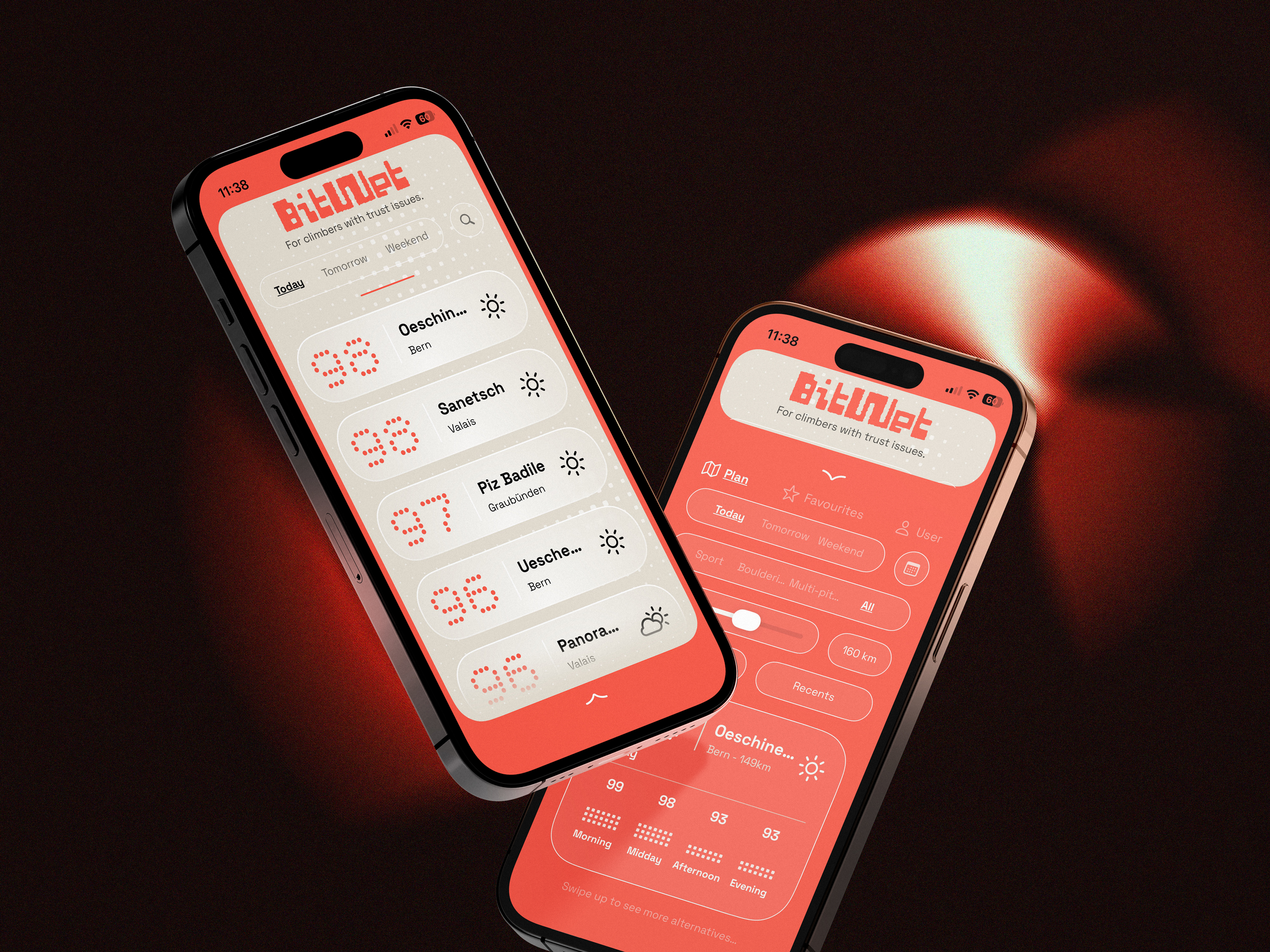
BitWet scores 97 Swiss crags for today, tomorrow and the weekend: rock dryness, wall warmth and how long good conditions might hold.
Four weather models feed it, selected by forecast horizon and cross-checked. Deciding what to model—and what to leave out—came before building the interface.
Free public weather data has limits. A small server fetches it once and shares the result, instead of repeating 97 requests for every person. The useful part is knowing what the score can tell you, and where its confidence ends.
THE IDENTITY
The logo began with lettering spotted on a T-shirt at the bouldering gym. Later, a blocky dot-matrix font joined the conversation. The two met, and that was the logo.
The colours took longer: two warm neutrals, black and coral. Coral marks a border, a fill or a point of interest. The information stays readable in black.
THE INTERFACE
Physical thinking. First screens.
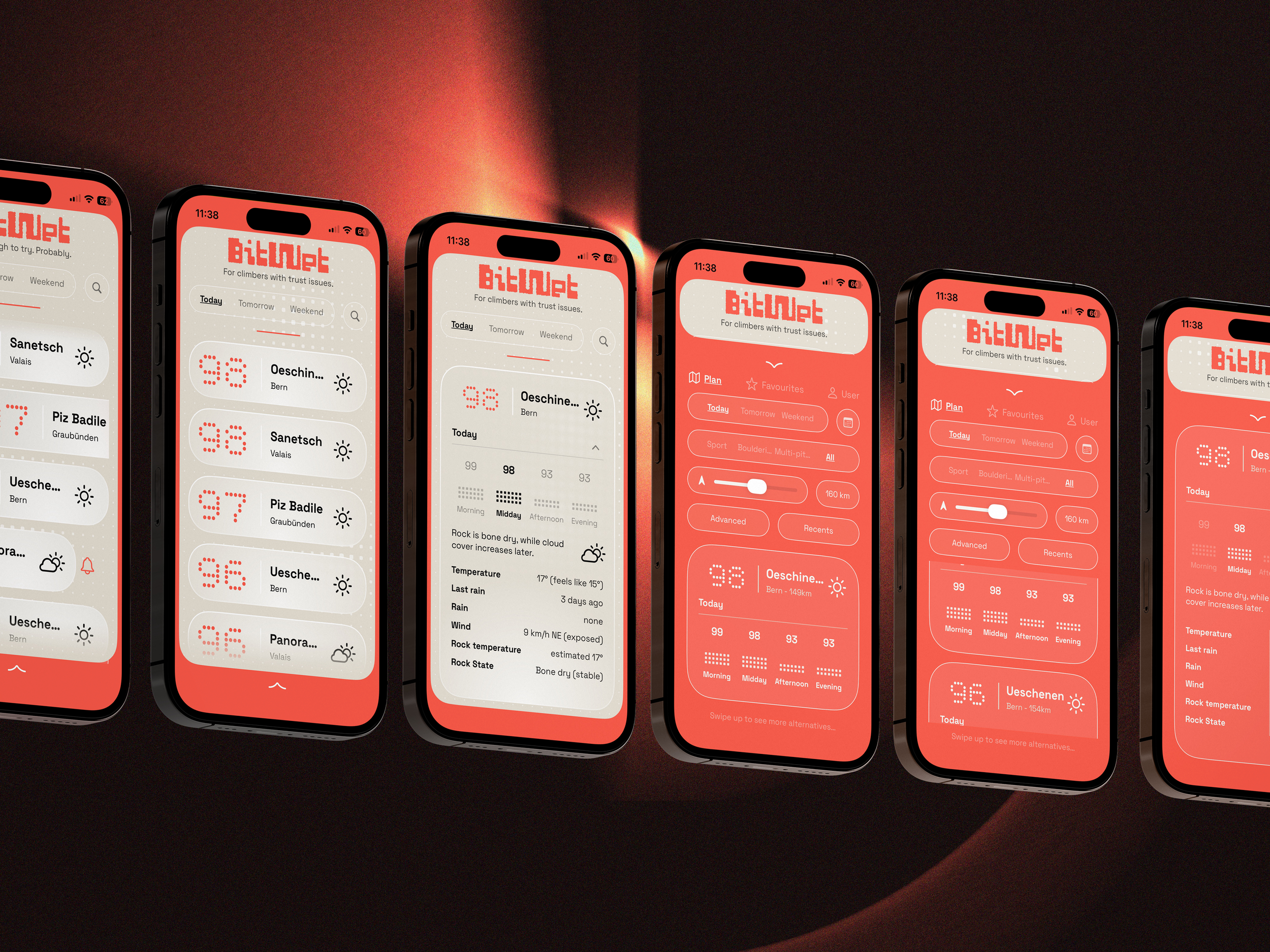
I usually design physical things. BitWet became my excuse to learn Figma properly: every screen and state drawn, measured and translated into something that could be built.
The interface evolved while building. I knew what it should feel like, even when I had not yet worked out how to get there. That judgement turned out to be the useful part.
THE MOTION
An edge travels. The page stays.
Plan, Crags, Map and User already sit underneath the home card, in their final positions. Opening one raises the card’s bottom edge and uncovers what was there.
One move, throughout the app. It took three builds to find it. The rule turned out to be worth more than the animation.
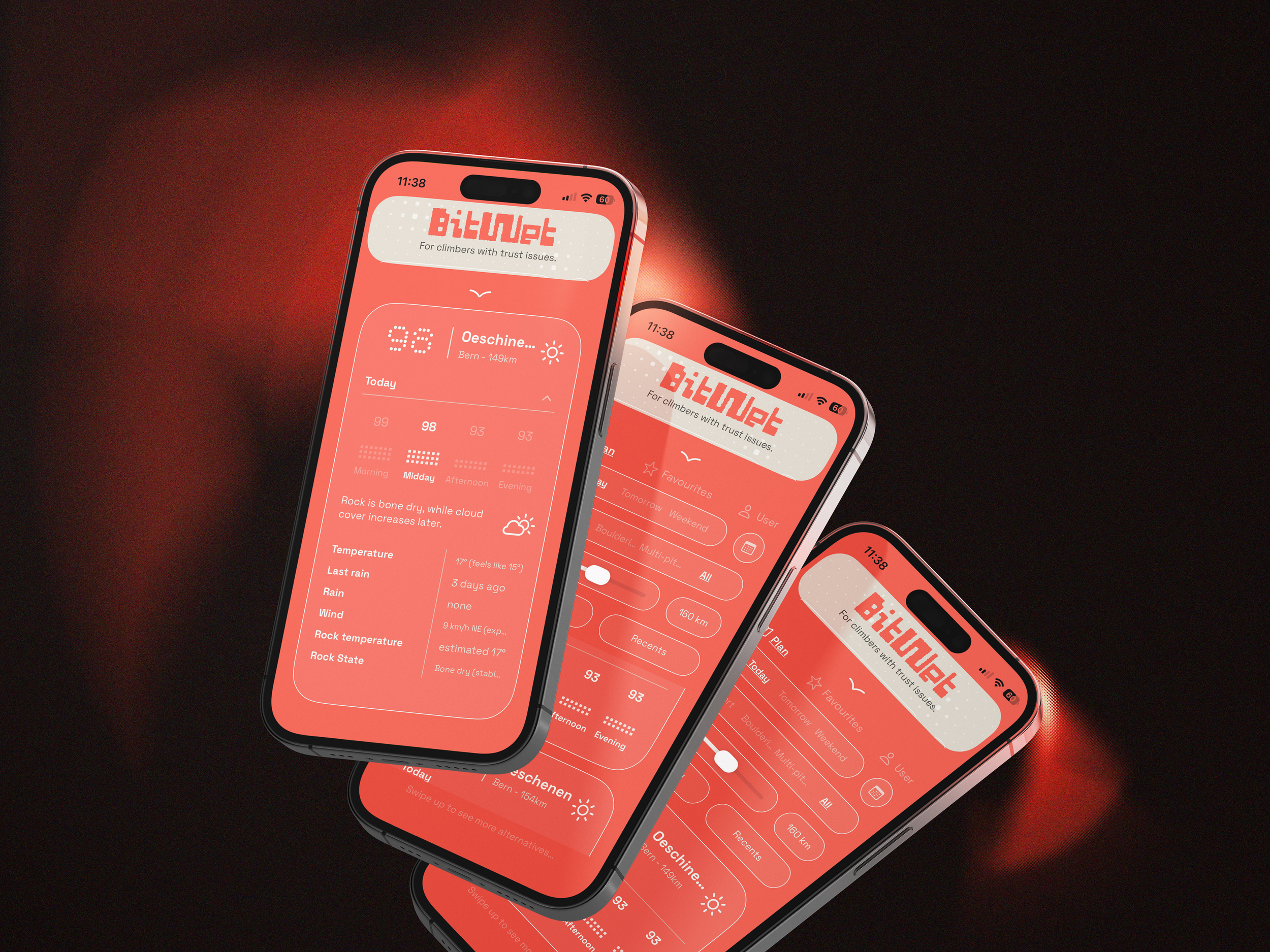
BitWet is pre-release and working. It runs on a phone against live Swiss weather, the scoring engine has been through two independent external audits, and what is left before a beta is mostly paperwork.
The thing I did not expect to learn is that building this way does not remove the work, it moves it. Out of typing, and into deciding, looking and checking. The machine is fast, tireless and occasionally, calmly, wrong about something nobody thought to look at.
Six weeks was not how long the code took. It was how long it took to trust it.