
REUSE / MAKING / QUESTIONABLE JUDGEMENT
A snowboard
discovers wheels.
The starting point was not “I want to build a skateboard.”
The starting point was “this snowboard has geometry, material intelligence, and a past life, what else could it be?”
Instead of designing a shape from scratch, the process reversed the usual hierarchy. The donor object came first. The theory followed reluctantly. Camber, flex zones, thickness transitions, and sidecuts, features meant for snow, were treated not as problems, but as quiet suggestions.
The result was less an act of design and more an extended conversation with fiberglass.
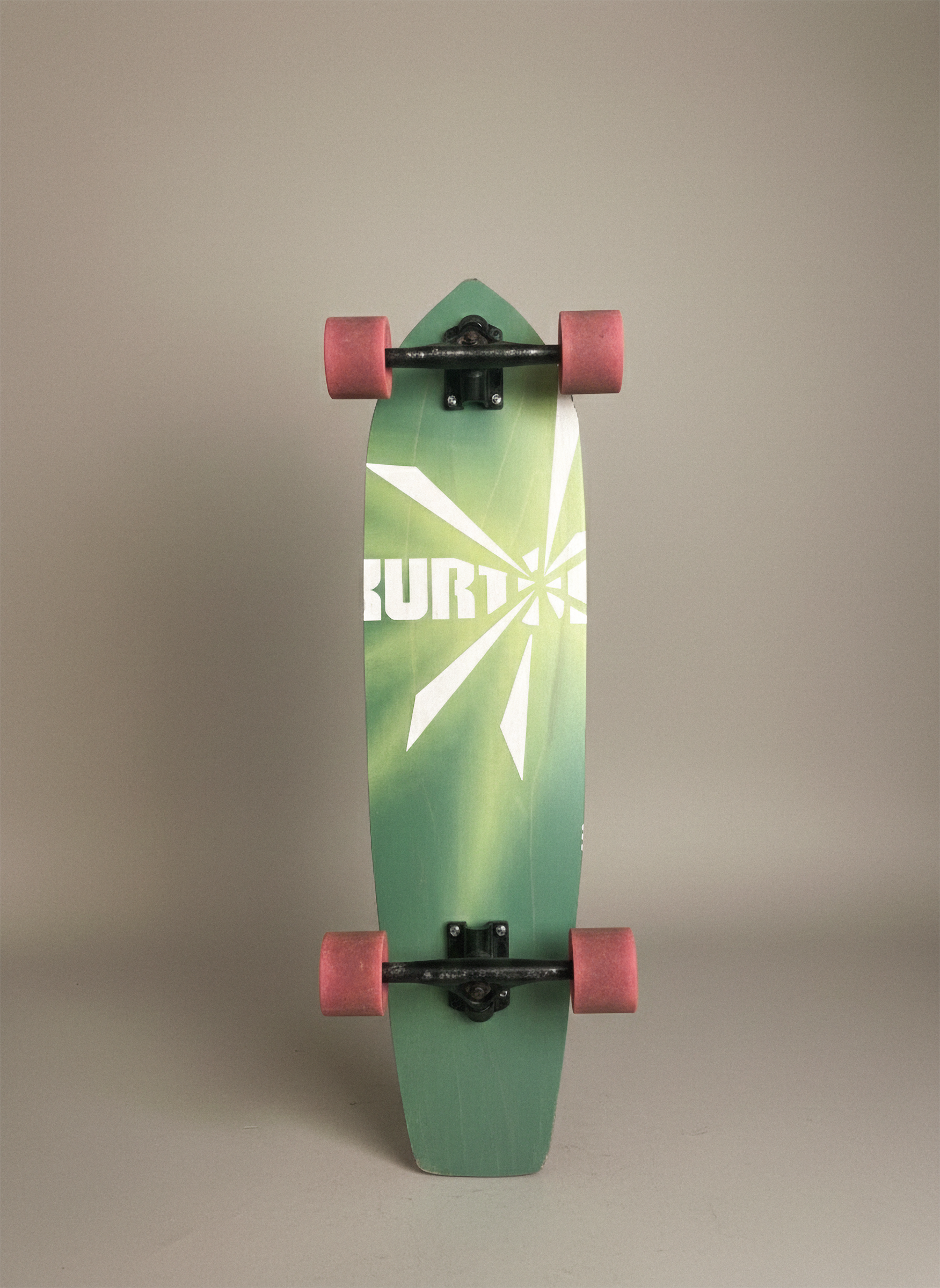
How It Was Made?
-
Entirely by hand. Slowly. With the wrong tools. This was a mistake. A productive one, but still a mistake. The material fought back. I learned exactly how snowboards are constructed because it forced me to.
-
Every cut revealed another layer, another constraint, another reason factories exist. None of this could have been learned cleanly on paper. The snowboard insisted on teaching by friction.
-
Rather than imposing a perfect outline, the final form emerged by listening to what the board could physically tolerate without becoming structurally offended.
-
Somewhere near the midpoint, it became clear that future versions would require a power jigsaw. This was not a failure. This was evolution.
This Seemed Reasonable
〰️
Against Better Judgment
〰️
Nobody Stopped Me
〰️
This Seemed Reasonable 〰️ Against Better Judgment 〰️ Nobody Stopped Me 〰️
A Cruiser, Somehow
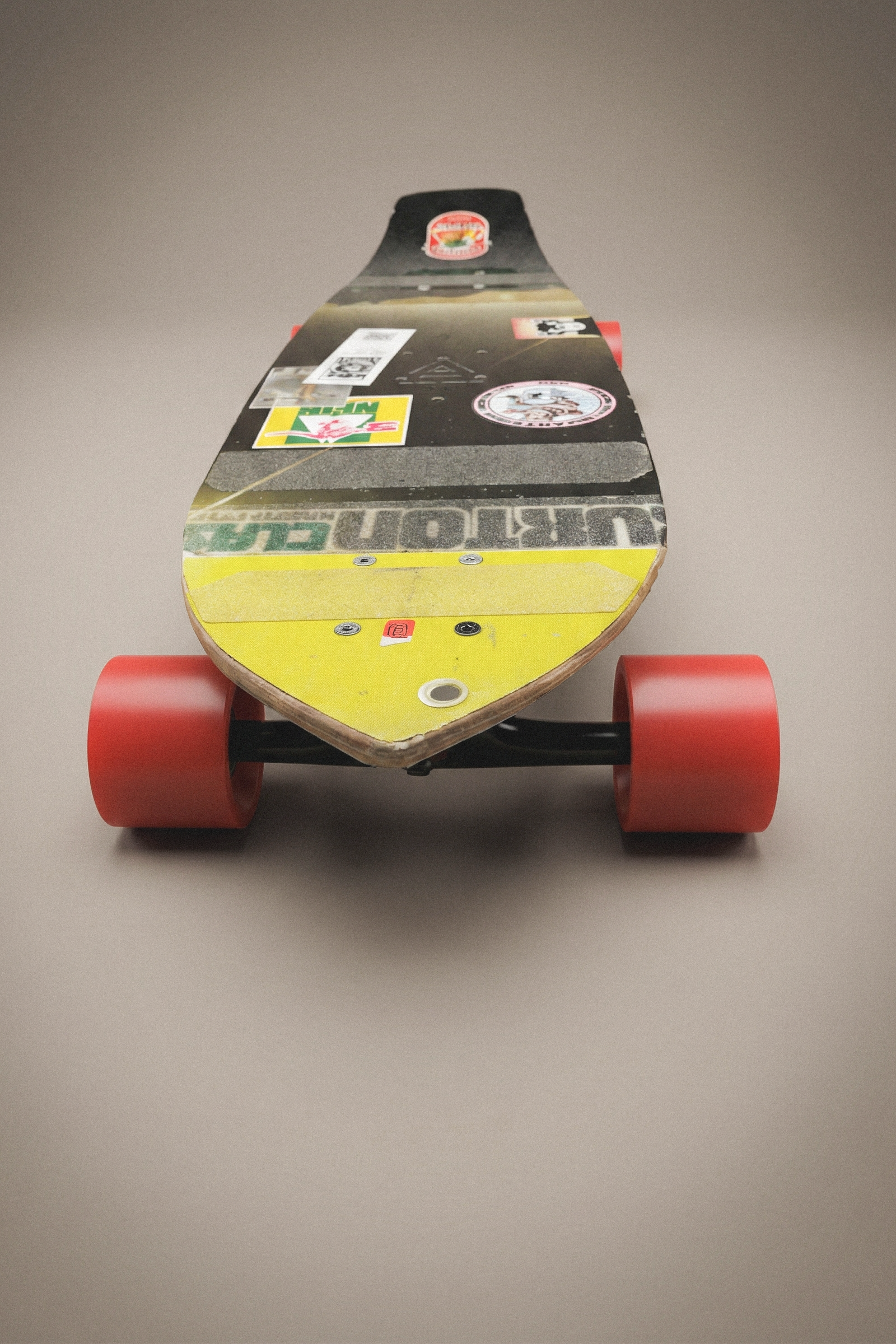
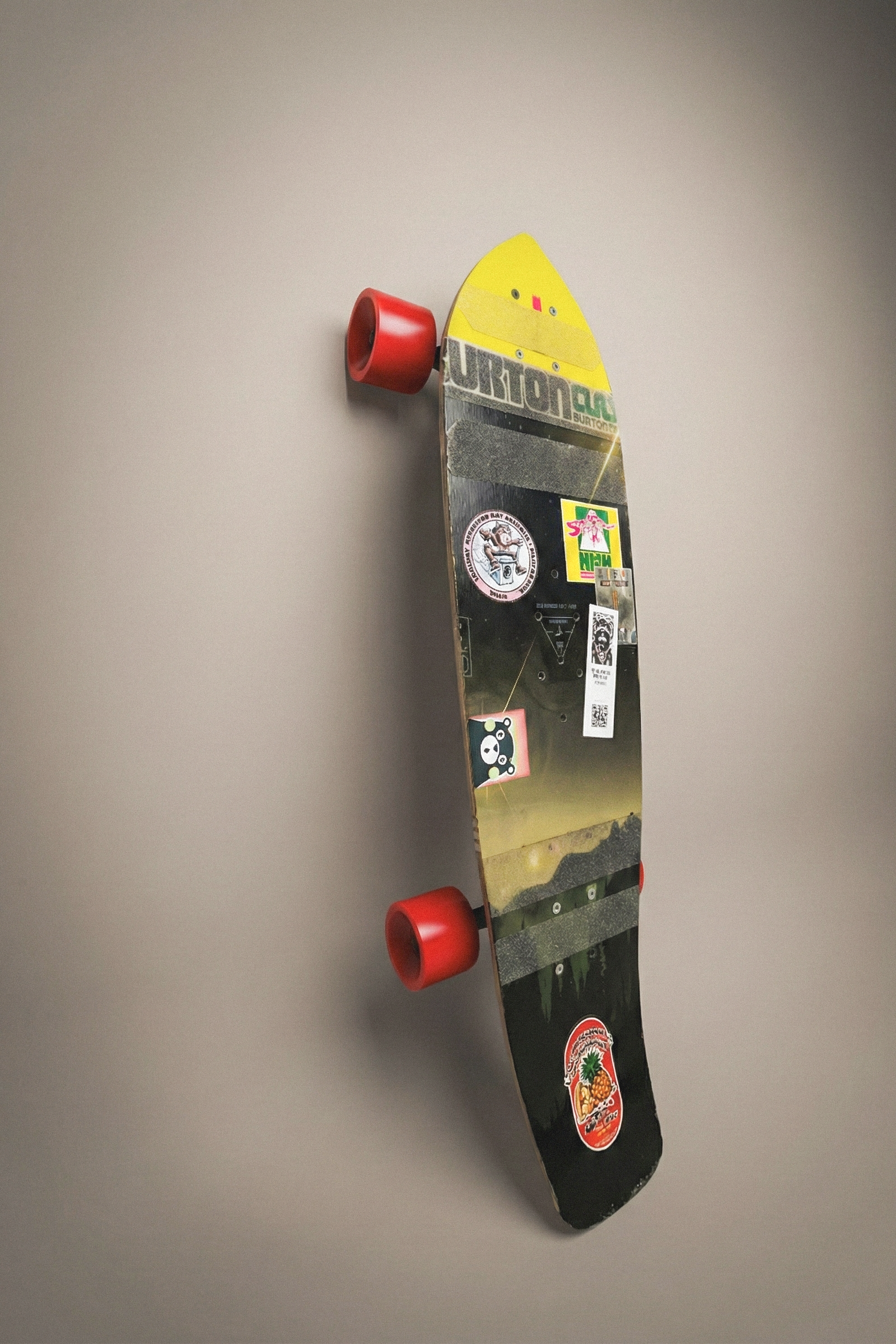
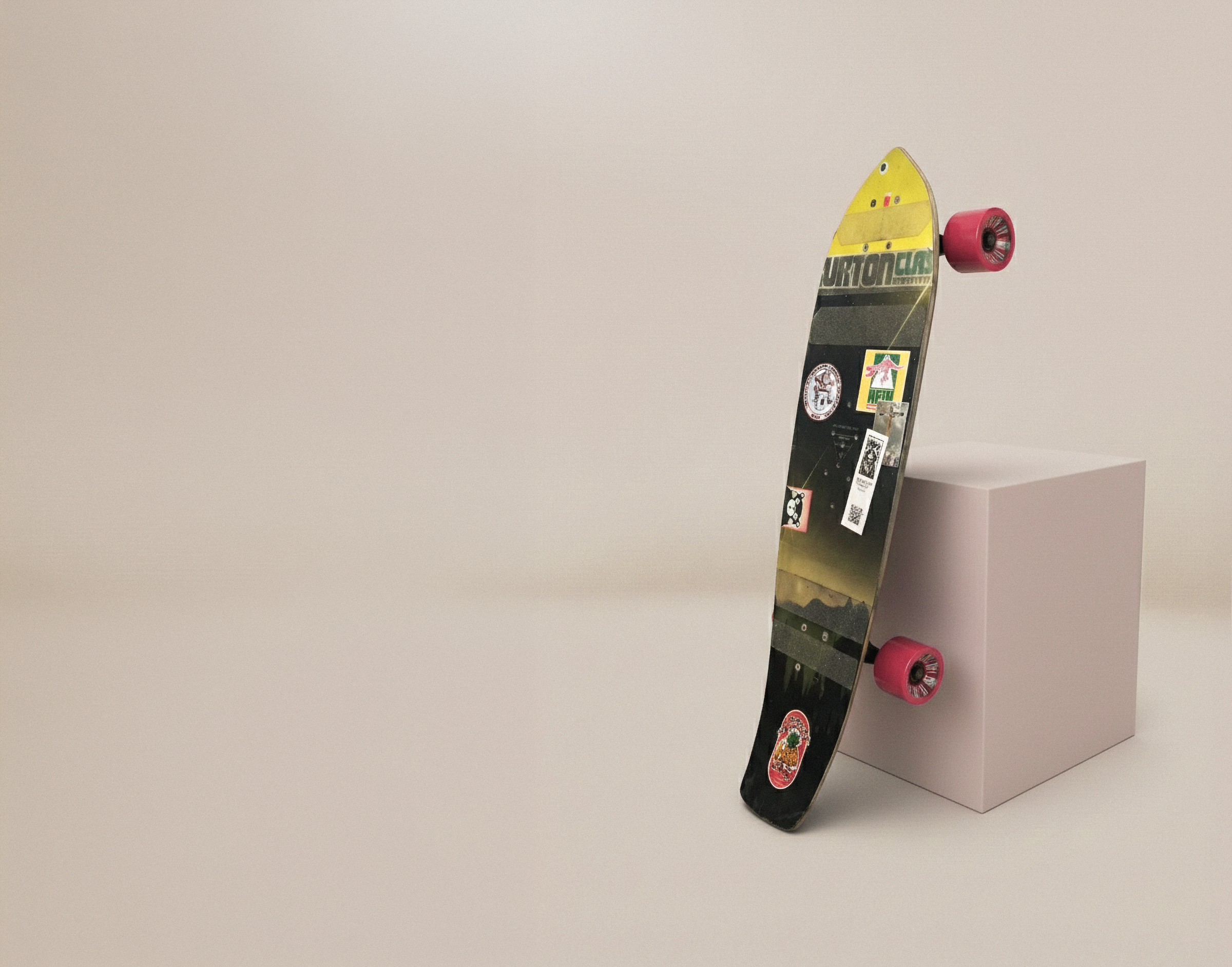
Against all reasonable expectations, the board turned out to be excellent.
It is stable without being dull, quick without being nervous, and particularly well suited to Zurich’s unique mix of smooth asphalt, tram tracks, and existential commuters. The original snowboard geometry contributes a calm, confident ride that feels intentional, even though much of it was discovered accidentally.
It is slightly crooked. Entirely honest. And far better than it has any right to be.
Field Notes
This project sits precisely at the intersection I enjoy most:
where theoretical design meets the physical stubbornness of real materials.
Nothing here was optimized. Nothing was simulated to death. The object became what it is through making, correcting, and occasionally swearing. The imperfections are not decorative; they are documentary evidence.
This is not a prototype for mass production. It is a proof of curiosity.
You can commission a custom version in two ways:
Start from a brand-new snowboard, selected for its material and geometry.
Send in your own old, beloved snowboard and allow it a second career.
Either way, the process remains slow, deliberate, and unapologetically hands-on.