
WRITING / EDITORIAL DESIGN / AI EXPERIMENT
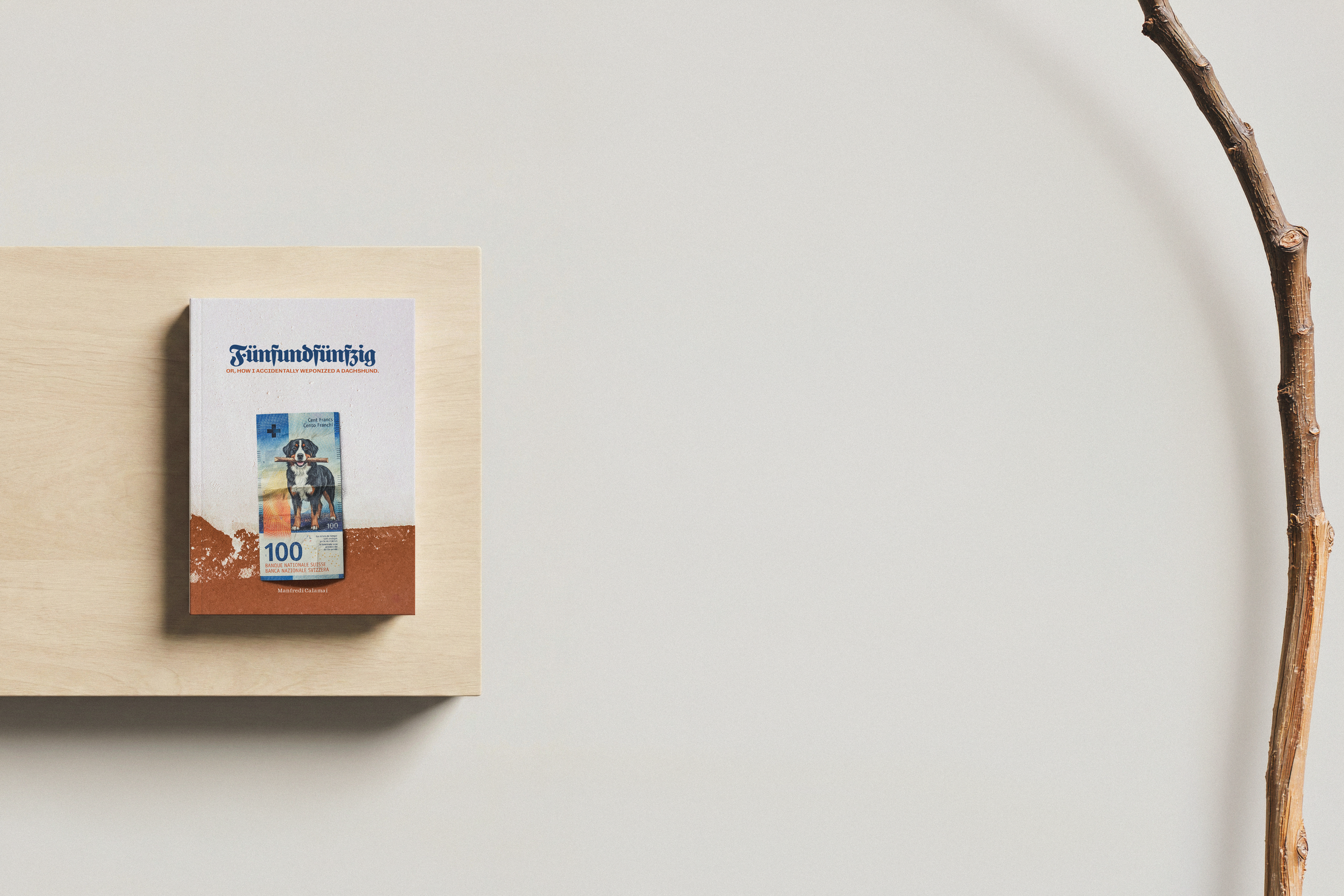
Fünfundfünfzig.
A joke about selling curated sticks to Zürich dog owners became a book. Apparently, presentation is everything.
I developed the premise, steered and edited the AI-assisted writing, and designed the illustrations, cover and physical format. A novel, almost. A design experiment, definitely.
A project born from a joke that refused to remain one.
This book did not begin as a literary ambition. It began as a throwaway observation, made during a walk in Zürich, about how easily an absurd idea could be taken seriously if presented with enough confidence, language, and price tags.
The original premise was simple and deliberately stupid: in Zürich, you could probably make a fortune selling curated sticks to dog owners, provided you applied the correct vocabulary and a careless infusion of capital.
Instead of dismissing the thought, I treated it as a design brief.
“The idea germinated on one of those days, built from fresh air, lightheartedness, and time to spare. Noelle and I were walking with the noble intent of getting completely lost in the Uetliberg forest, hoping that chance and faith would deliver us to a Hütte for Punch and Tea. On the edge of a dog park, the sight of ‘a very good stick’ ignited a chain reaction that led to a grave statement: ‘You know, in Zurich, you could probably make a fortune selling curated sticks to dog owners, given some solid marketing and a careless infusion of cash.”
Illustrations, diagrams, and visual interruptions
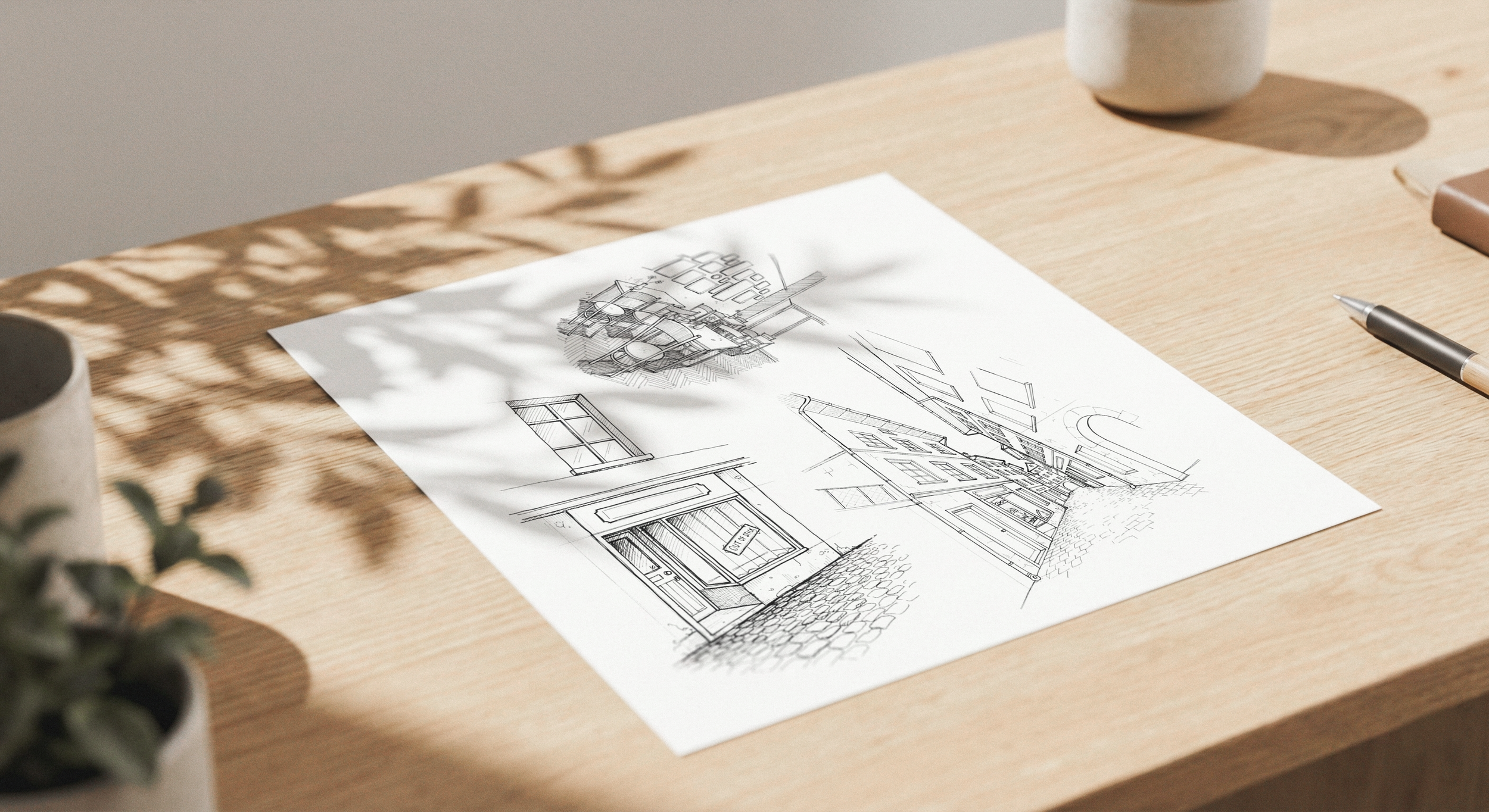
The book includes illustrations, figures, and mock-documentary elements that function as pauses rather than explanations.
These visuals are not decorative. They act as false evidence, bureaucratic artefacts, or visual deadpan reinforcing the idea that the world of the book takes itself far more seriously than it deserves.
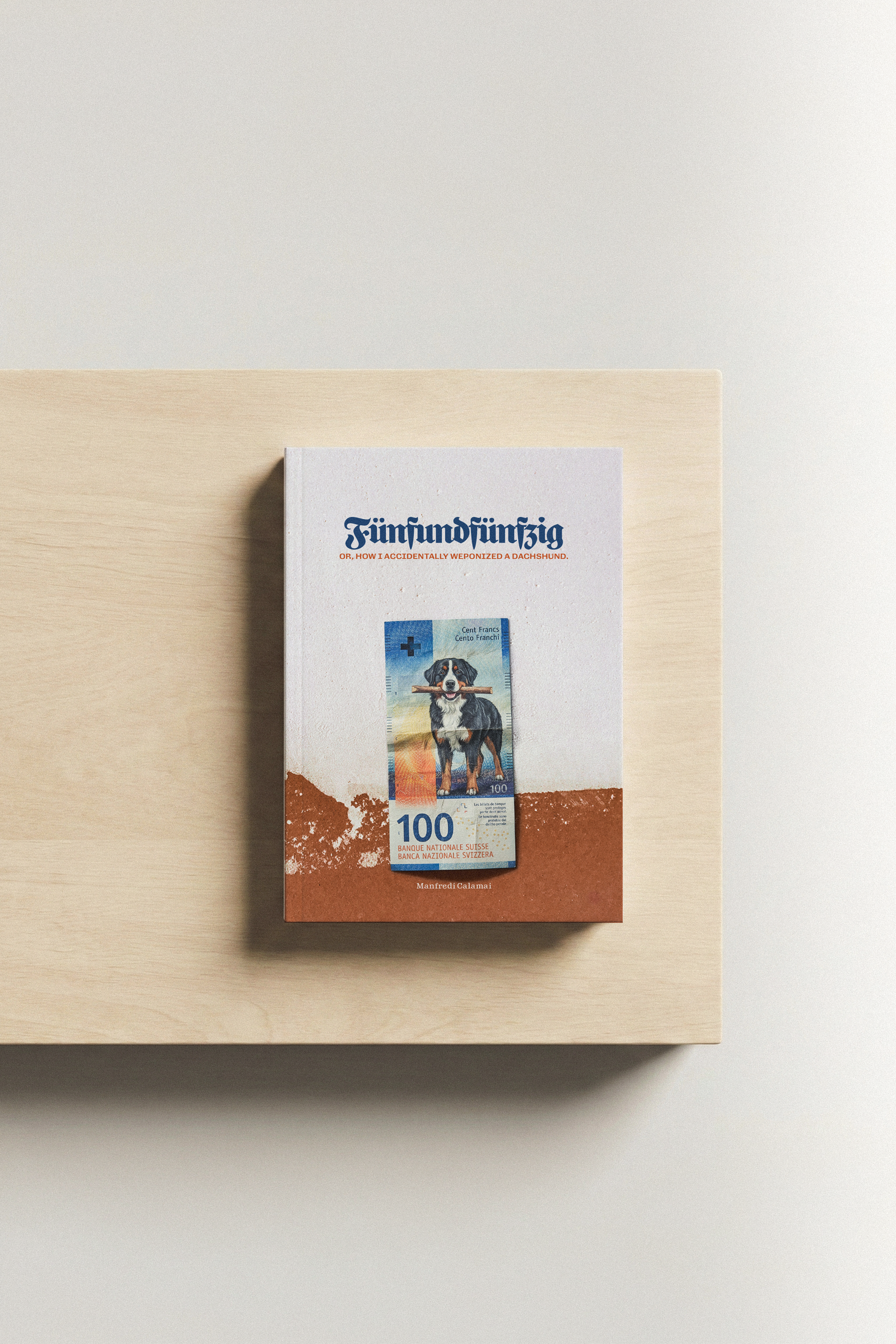
Cover design and physical format
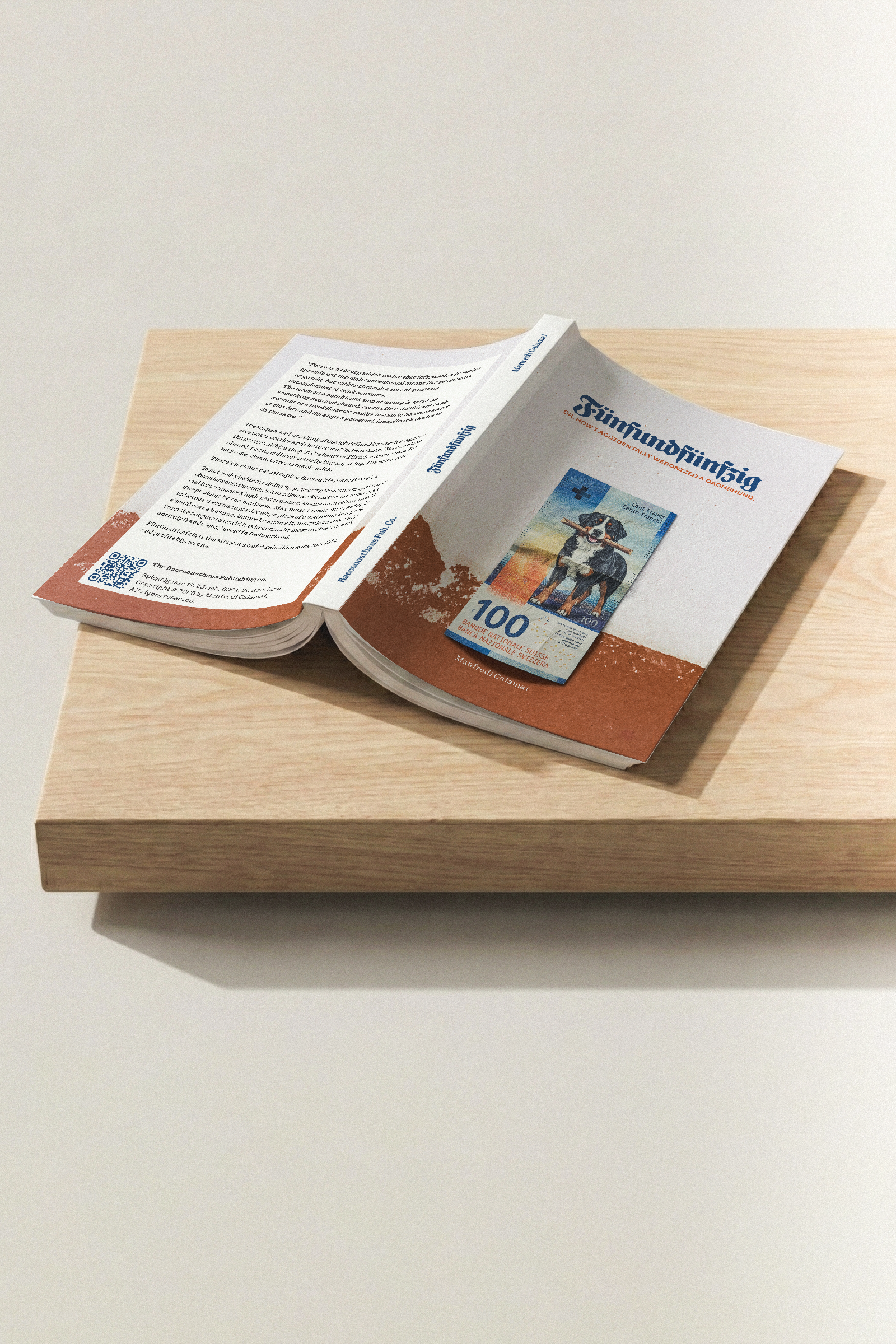
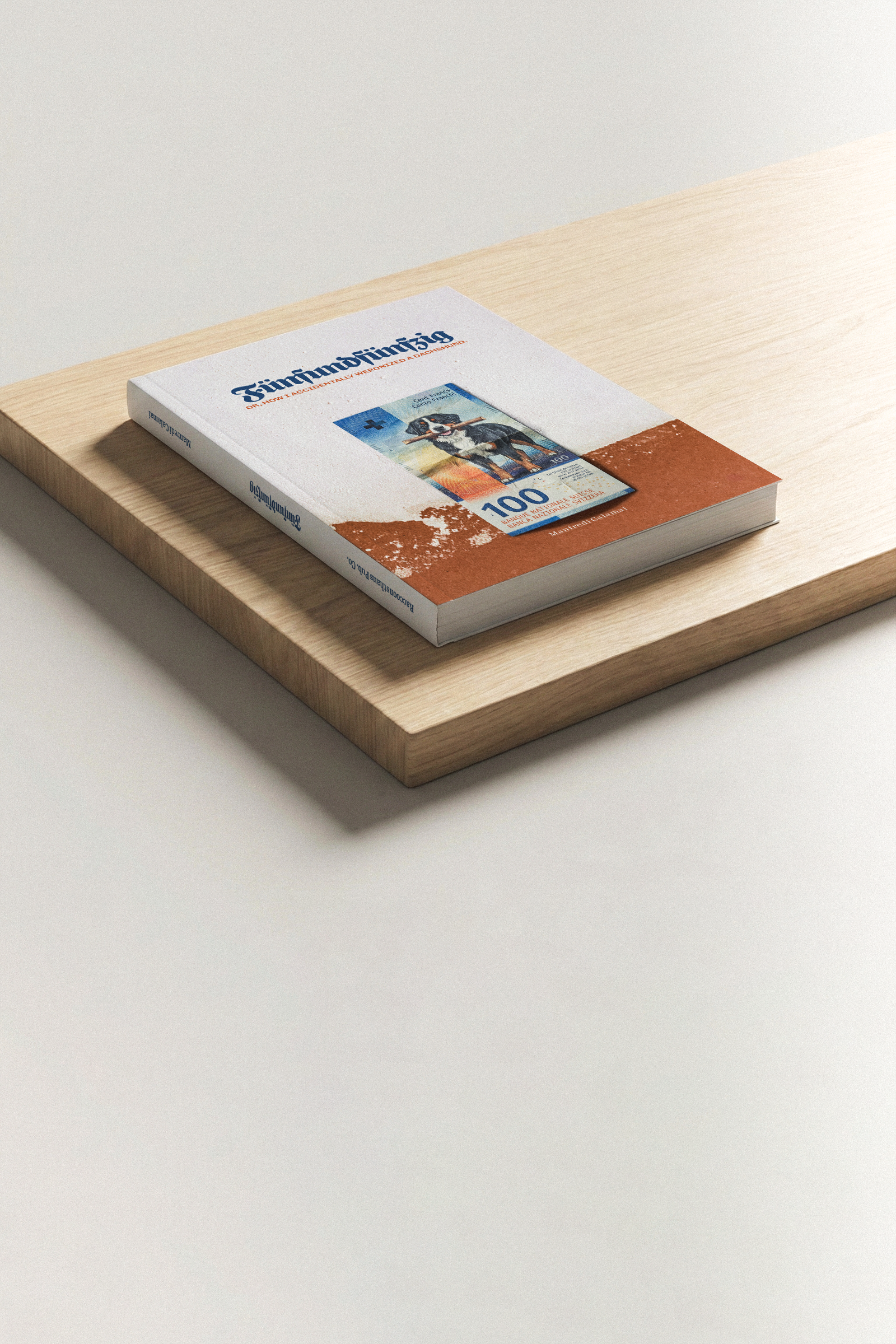
The cover gives the book just enough authority to be taken seriously—and enough uncertainty to invite a closer look.
I chose the format to work as an object: comfortable in the hand, easy to pick up, open at random and turn over. Reading it remains strongly encouraged.
The back cover adds fictional endorsements and legal language. A small experiment in how confidently presented nonsense can acquire the appearance of legitimacy.
WRITING WITH AI
A material to argue with.
I used prompts and structural constraints to generate material, then selected, rewrote and discarded it. Tone drift was corrected by hand. Jokes were trimmed to be more Swiss. The absurdity had to stay precise.
The model did not make the editorial decisions. The book took shape through sustained human editing: treating AI more like clay than a co-author.
How the book was made
-
The book began with a clear idea and a rough script rather than a finished text. I defined scenes, constraints, and narrative boundaries before writing any prose. This initial structure acted as a reference point the entire project had to obey.
-
AI was used to expand specific sections, never to write the book as a whole. Each chapter was generated in isolation, with instructions about tone, scope, and intent. Volume was easy; coherence was not.
-
The hardest part was preventing stylistic and narrative drift. The AI constantly needed reminders of what had already happened, what had not, and what should not be anticipated yet. Context was repeatedly refreshed using summaries of previous chapters and notes about what came next.
-
Language required continuous correction. Common AI artefacts—generic phrasing, symmetrical sentences, evergreen words, and overly tidy punctuation—had to be removed. Tone was actively restrained to keep it dry, precise, and consistent.
-
I worked across multiple chats at the same time. One functioned as a master prompt containing tone rules and stylistic constraints. Others were used for drafting, testing, rejecting, and rewriting. Text moved constantly between them.
-
Human editing was not a final step but a permanent one. Sections were rewritten, collapsed, or discarded entirely. The book was shaped less by what was added than by what was removed.
The book emerged through selection, correction, and subtraction. The final text is the result of sustained human steering rather than autonomous generation.
Why this project matters (to me)
This book sits at the intersection of writing, design, systems thinking, and AI experimentation. It is less about narrative resolution and more about observing how meaning, value, and legitimacy are constructed.
It also fundamentally changed how I work with AI: not as a tool for speed, but as a way to provoke, resist, and refine ideas through friction.
Fünfundfünfzig is not a product demonstration. It is a documented process of taking an idea slightly too seriously—and watching what happens