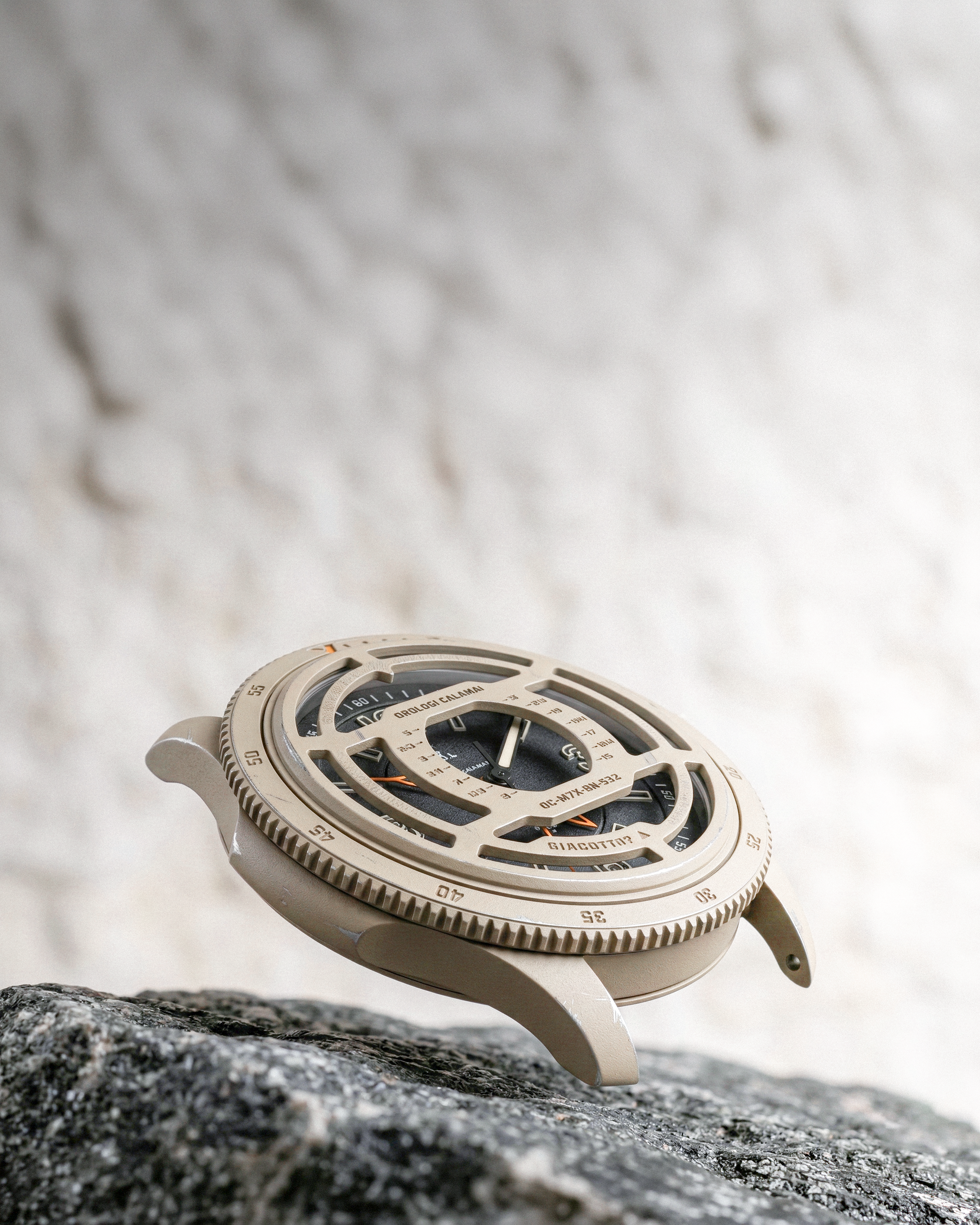
GMT “Botte di ferro”.
*
GMT “Botte di ferro”. *
OROLOGI CALAMAI / A CLIMBING EXPERIMENT
Granite does not negotiate.
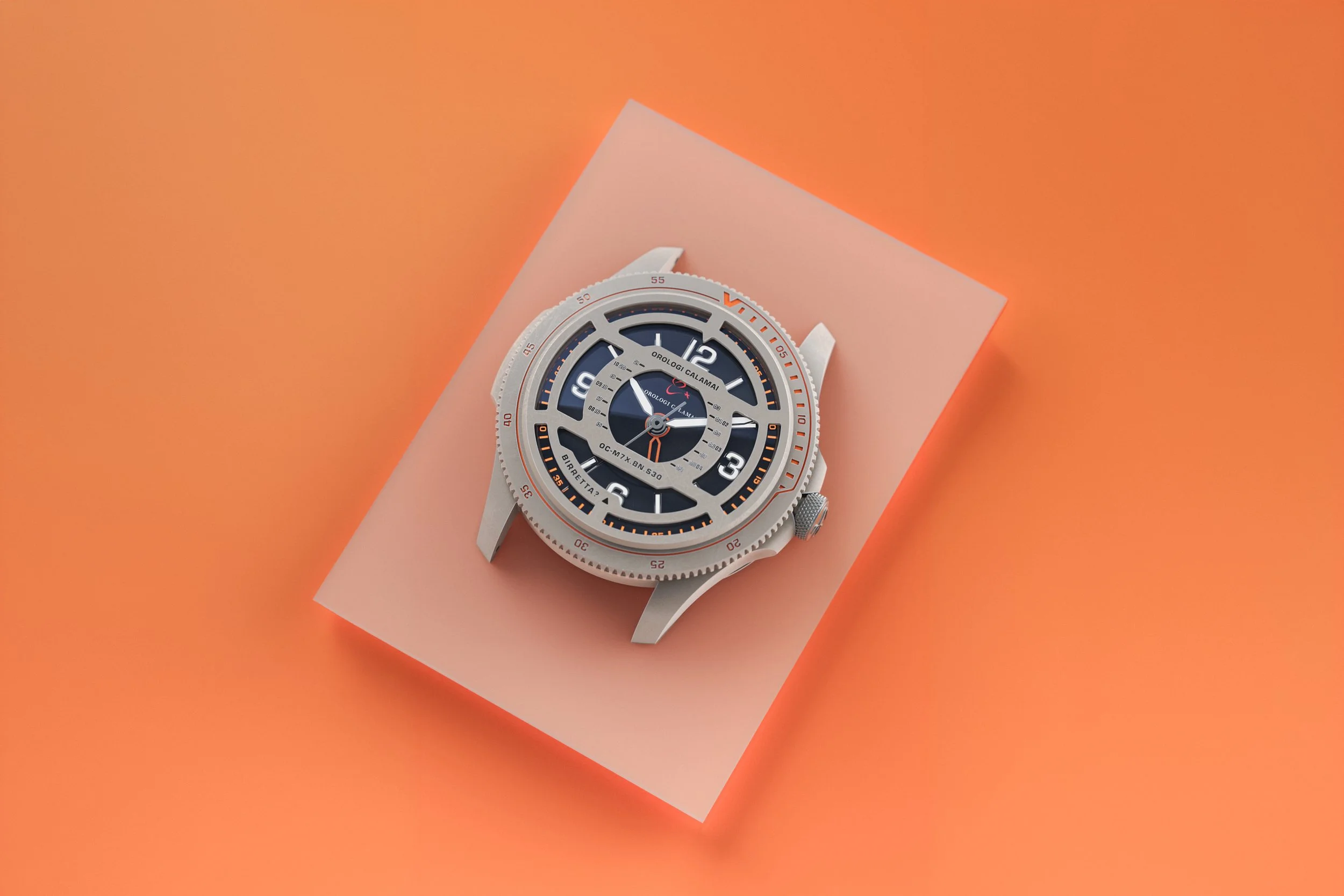
I modified our GMT with a fixed protection cage and a tougher surface treatment. Removing the watch would have been sensible. This was more interesting.
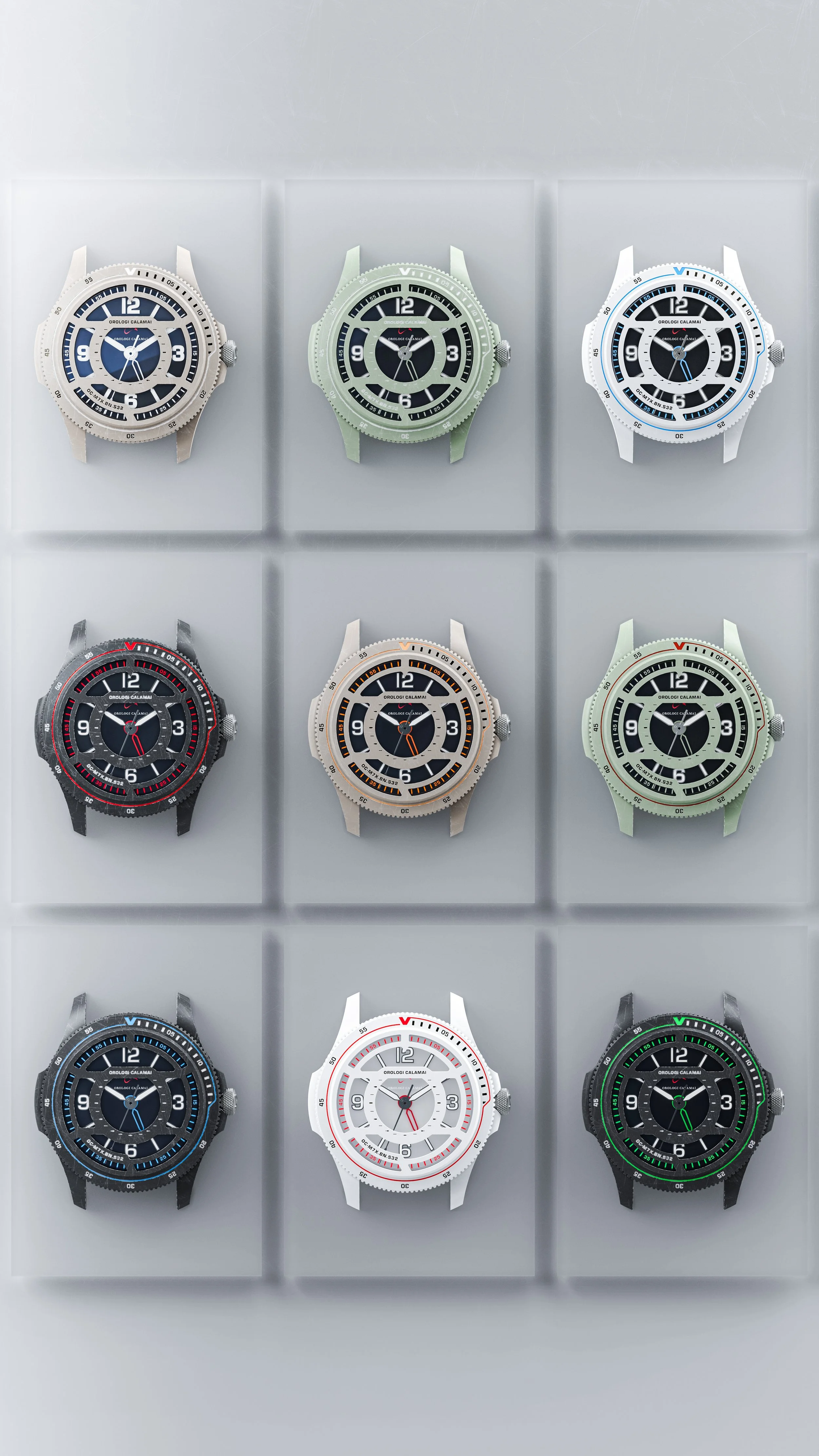
This started as a practical irritation. Then it became a structural intervention.
Instead of removing the watch from the rock, I removed the rotating bezel and replaced it with a fixed protective cage. A metal guard that shields the crystal from lateral impacts. At first it looked wrong. Then I remembered that older military-issued watches for submarine crews often had similar protective frames. Tight metal corridors. Hard surfaces. No patience for delicacy. Context restores logic.
Protection Cage
The bezel is no longer decorative or functional in the conventional sense. It is structural. The cage rises just enough to absorb blows before the glass does. It changes the silhouette. It adds mass. It also adds purpose. The GMT remains slim, but now it is prepared for contact with reality.
Surface Treatment
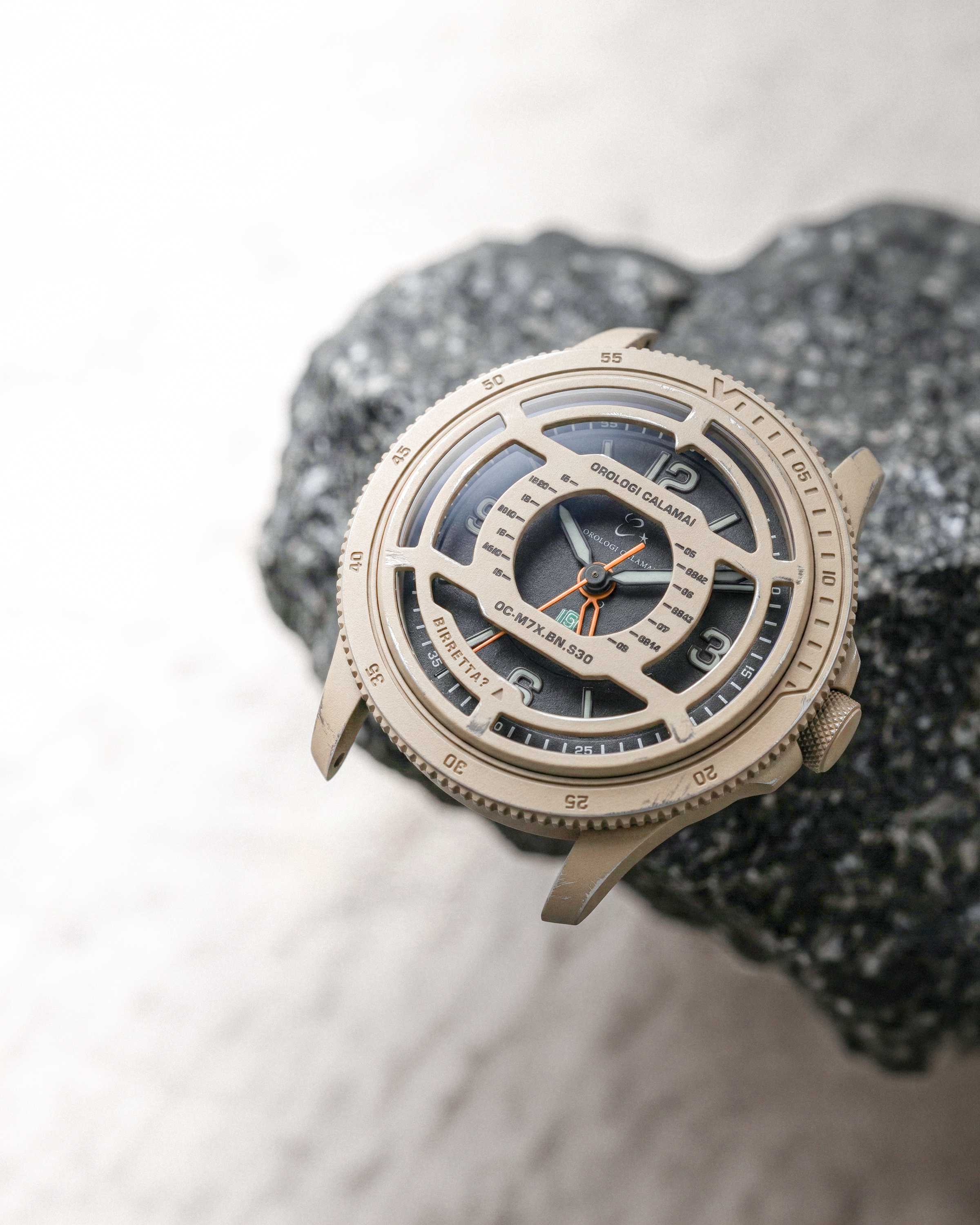
The entire case was coated to increase surface resistance. Not to preserve it, but to age it correctly. The more it gets scuffed against granite, the better it should look. A climbing watch that fears scratches is conceptually confused. This one is not.
The “Birretta”
On the new bezel, I engraved a small “birretta”. A reminder that doubt is temporary and summit beers are real. It is a private motivator disguised as ornament. Subtle. Slightly absurd. Entirely necessary.
“Botte di Ferro” roughly translates to iron barrel. It is not elegant. It is not polite. It is a GMT built for rock, impact, and the occasional irrational decision to keep the watch on.
OUT ON THE ROCK
Granite, scuffs and a protective cage. The GMT, in its intended company.