
 Image 1 of 3
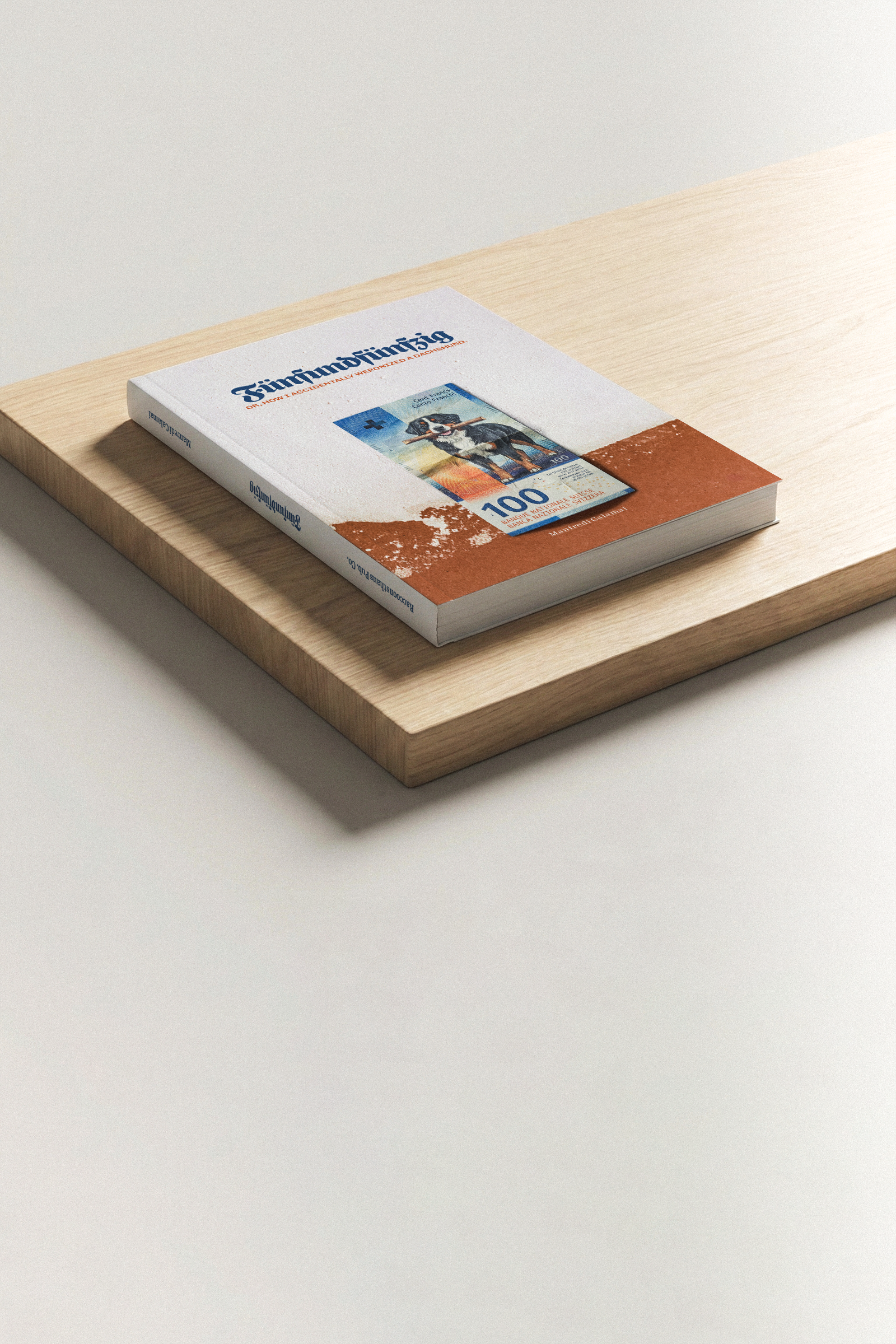 Image 2 of 3
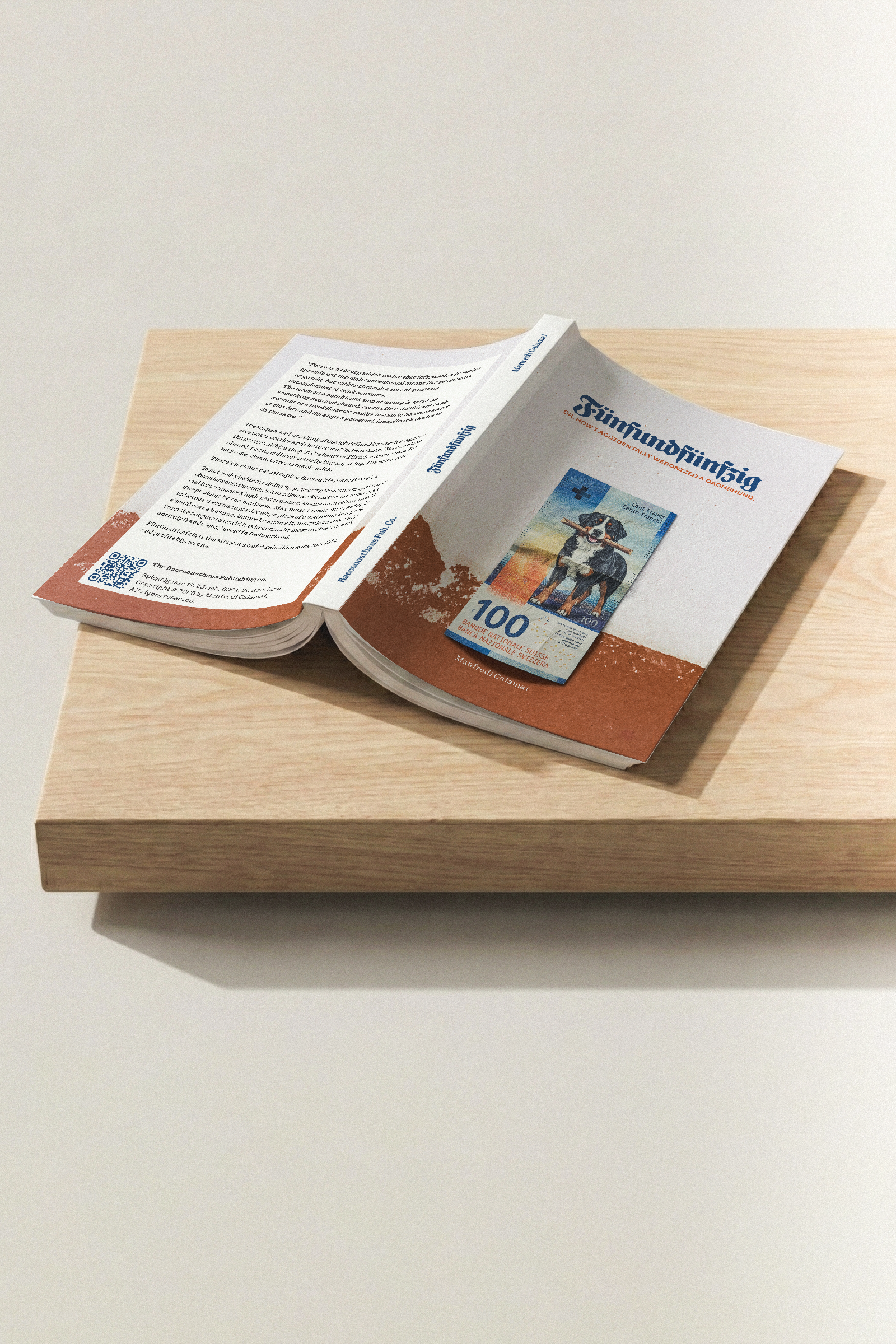 Image 3 of 3
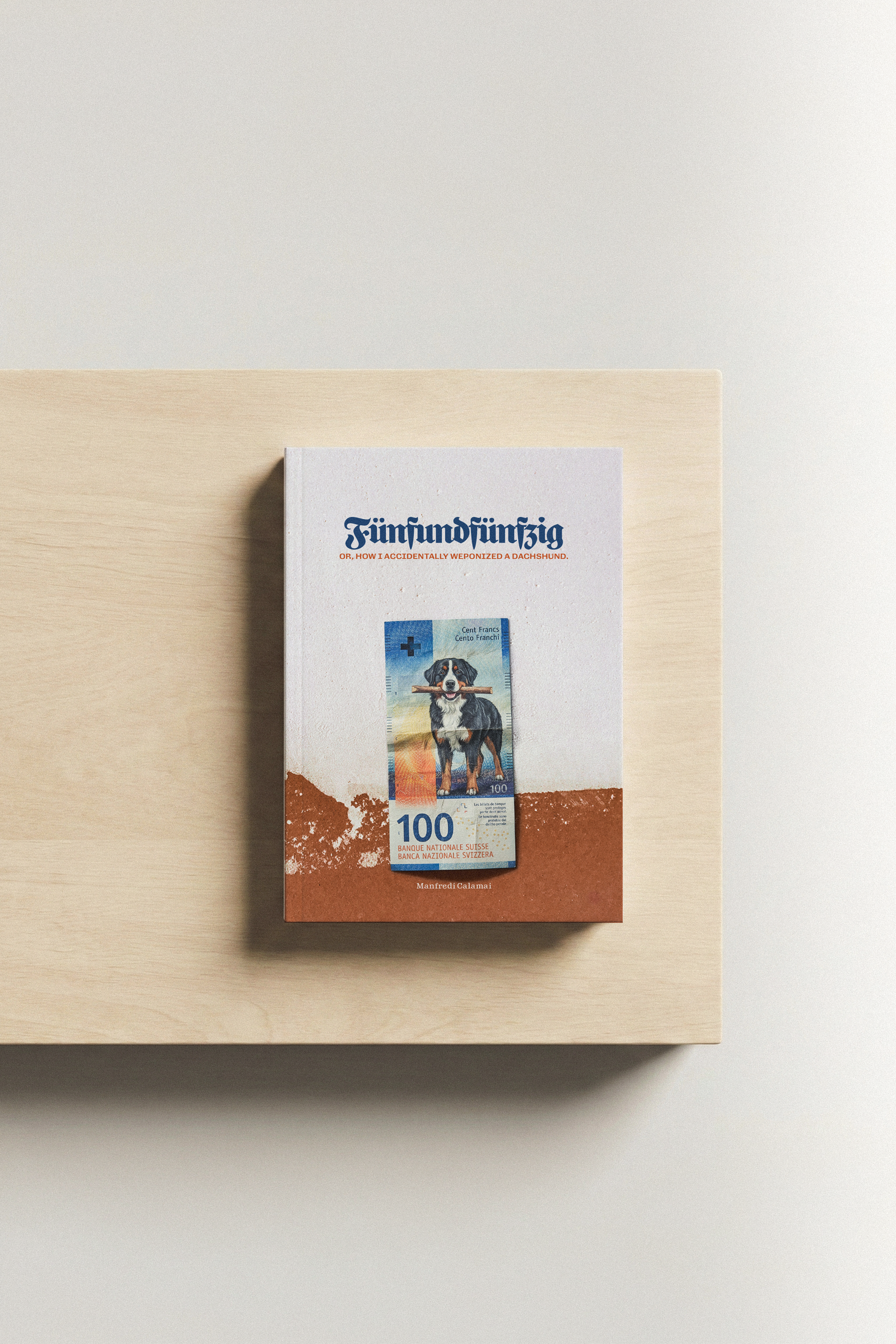
Fünfundfünfzig tells the story of Max, a man who attempts to escape a soul-eroding office job by opening a shop so absurd that it cannot possibly succeed. The shop sells exactly one object: a clean, unremarkable stick. The plan is elegant, defensive, and doomed.
Against all logic, taste, and basic economic theory, the shop becomes a success. What follows is a rapid escalation of nonsense. Wealthy patrons project meaning, status, and metaphysical importance onto a piece of wood found in a park. Prices rise. Explanations multiply. Entire belief systems are improvised on the spot to justify why nothing should cost everything. Zürich, sensing opportunity, leans in.
The novel is a satirical examination of luxury culture, modern work, conceptual art, and the dangerous human tendency to take symbols more seriously than reality especially when a receipt is involved. It is also, incidentally, about quiet rebellion, accidental fraud, and the fragile boundary between irony and income.
-
Absurd, but internally consistent
Calmly hysterical
Philosophically irresponsible (from a clearly biased standpoint)
Meticulously serious about very unserious things
-
Ideas being followed well past the point where they should have been abandoned
Objects acquiring meaning far beyond their physical capabilities
Narrators who insist on explaining things long after it has stopped being helpful
Zürich as a perfectly functional backdrop for conceptual disasters
-
Pages: ~148
Author: Manfredi Calamai
Publisher: The Raccoonsthaus Publishing Co.
Language: English
Format: Print, softcover
Copyright © 2025
This book does not contain answers. It contains a stick, several theories about the stick, and a city enthusiastically arguing with itself about what the stick means.
Buy the book Reading it may not improve your life, but it will at least give you a coherent explanation for why it hasn’t yet.
〰️
Buy the book Reading it may not improve your life, but it will at least give you a coherent explanation for why it hasn’t yet. 〰️
-
He was rather proud of ‘terroir.’ He’d heard it used at a wine tasting once and had a vague idea it meant ‘dirt.’
“The provenance is everything, you see,” he continued, words now flowing like a river of pure, unadulterated nonsense. “This piece in particular is from the late autumn fall, specifically from the upper, south-facing slope of the Zürichberg. A very exclusive micro-climate. The wood—a rare varietal of Common Ash, Fraxinus excelsior ‘Privatbank’—is known for its unique mineral uptake, which gives it this… this remarkable density. A certain… gravitas.”
The woman nodded slowly. Provenance. Terroir. These were words she understood. In her world, nothing simply was. Everything had to be from somewhere, preferably somewhere eye-wateringly expensive and difficult to get to.
“And the… the feel of it?” she asked.
“Ah, the haptics,” he said, confidently. “The haptic profile is where this piece truly excels. Notice the balance. The weight is distributed with a slight distal bias, creating a… pleasingly assertive presence in the hand. The grain structure has a delightful… tension. It has a good… chew.”
He had meant to say ‘texture.’ ‘Chew’ had just… slipped out.
The woman’s eyes lit up. “A chew! Of course! My god, it’s so obvious now.”
He needed a number that sounded like it had been arrived at by a committee of very serious Swiss gentlemen after months of careful deliberation.
“The price,” he said, lowering his voice, “is five hundred and fifty francs.”